Iraq and the Future of Energy... Development, Technology Transfer, and Localization
03-12-2025
Iraq and the Future of Energy... Development, Technology Transfer, and Localization
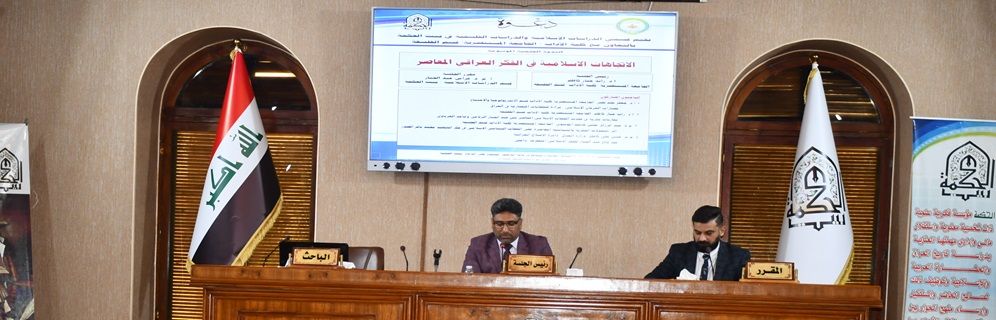
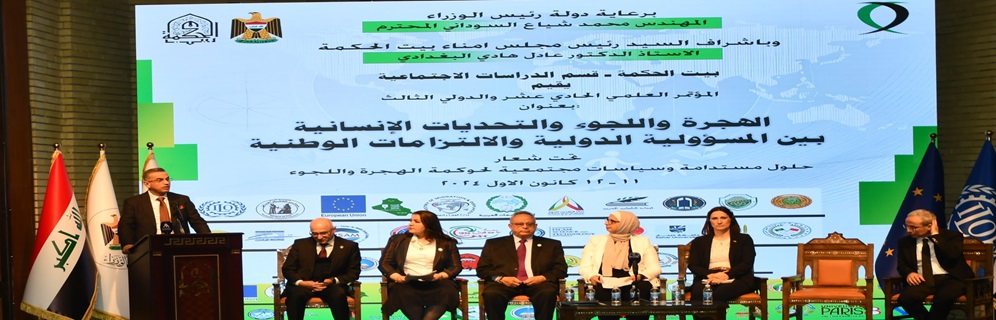
Under the patronage of His Excellency the Prime Minister, Eng. Mohammed Shia Al-Sudani, and with direct supervision from the Head of the Board of Trustees of Bayt Al-Hikma (House of Wisdom), Dr. Qahtan Ni'ma Hassan Al-Khafaji, the international scientific forum titled "Iraq and the Future of Energy... Development, Technology Transfer, and Localization" commenced its work today, December 3, 2025. The forum is organized by the Information and Decision –Making Support Center at Bayt Al-Hikma and will run for two consecutive days, with a high-level diplomatic and political presence.
The conference proceedings began with a recitation of verses from the Holy Quran by the reciter Dr. Rafi' Al-Ameri, followed by the recitation of Surah Al-Fatiha for the souls of the martyrs.
This forum is concerned with setting clear pathways for transforming Iraq's energy sector into one capable of responding to the requirements of economic growth, adopting modern technologies, and enhancing efficiency and sustainability. It aims to discuss mechanisms for transitioning from traditional reliance on resources to a more diversified system based on knowledge, innovation, and technical partnerships. It also serves as a space for exchanging expertise between governmental, academic, and industrial parties to formulate practical recommendations that can be converted into executable programs.
The opening session began with a speech by Dr. Qahtan Ni'ma Hassan Al-Khafaji, Head of the Board of Trustees of Bayt Al-Hikma, in which he emphasized the importance of enhancing Iraq's capabilities in renewable energy fields, considering it an essential step towards building a sustainable energy sector that supports development, reduces waste, and places the state in an active position within global transformations. He commended the role of the supporting bodies in ensuring the success of Bayt Al-Hikma's endeavors and achieving its goals, and praised the scientific elite participating in the forum.
In his speech, the Supervisor of the Information and Decision –Making Support Center and Head of the Scientific Committee, Prof. Dr. Salah Hamza Abd, pointed to the rapid global shifts in the energy sector, the expansion in the use of advanced technology, the growing trend towards sustainable energy sources, and the necessity of establishing a clear vision and a comprehensive scientific strategy for Iraq that ensures optimal utilization of its natural and human resources, contributing to energy security and economic development in the short and long term.
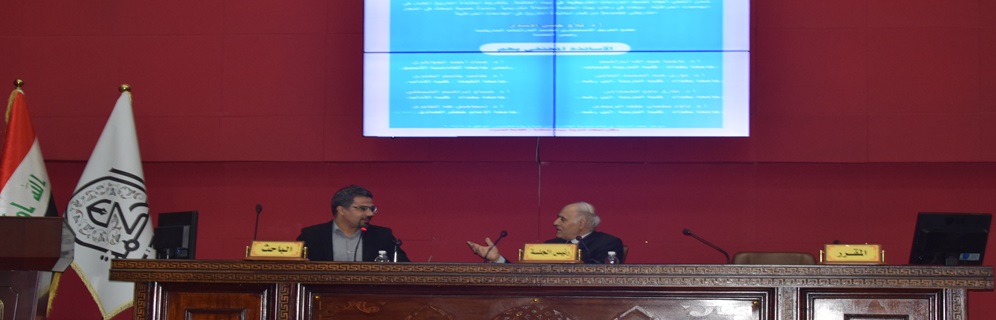
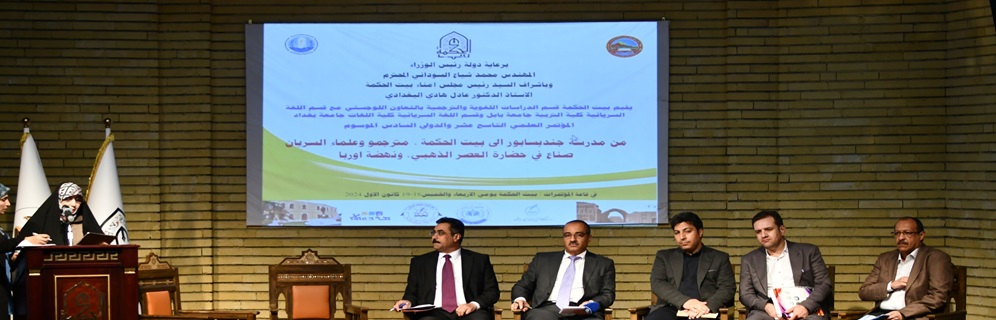
The first day of the forum included an interactive discussion panel titled "Iraq and the Future of Energy... Opportunities and Challenges," featuring: Prof. Dr. Nasser Al-Asadi (Prime Minister's Advisor for Transport Affairs), Prof. Dr. Hisham Al-Alawi (Undersecretary of the Ministry of Foreign Affairs for Political Planning), Prof. Dr. Falah Al-Ameri (Prime Minister's Advisor for Oil Economics), and Prof. Dr. Diyaa Al-Jumaili (Prime Minister's Advisor for Smart Governance and Artificial Intelligence). They were moderated by: Prof. Dr. Suhad Ismail Khalil (College of Political Science - Al-Nahrain University), Eng. Maher Abd Al-Sada Al-Ameri (Member of the International Association of Energy Engineers), and Eng. Amer Issa Al-Jawahiri (Iraqi Engineers Association). They discussed several axes, including Iraq's economy, water, climate change, the role of smart governance in developing the Development Road Project, and ways for the Iraqi economy to transition from a rentier to a knowledge-based economy through the upskilling and training of youth and graduates in the Fourth Industrial Revolution skills led by artificial intelligence. The session also addressed regional and financial challenges in attracting investment and developing the financial and banking sector and its role in solving crises in the field of energy development.
The activities of the first day concluded with an interactive dialogue with the audience, which was diverse, including a group of experts, academics, and representatives from ministries, bodies, and research centers, who enriched the session's topic by presenting ideas, proposals, and perspectives.