The Reality of Administrative Corruption in Iraq and the Role of the Integrity Commission
17-11-2025
The Reality of Administrative Corruption in Iraq and the Role of the Integrity Commission
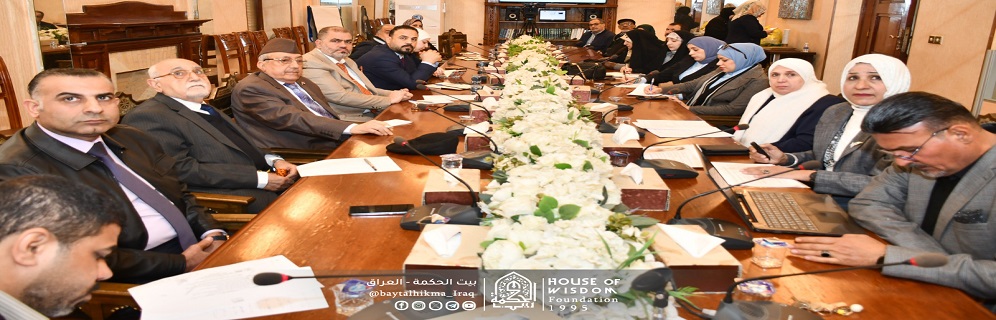
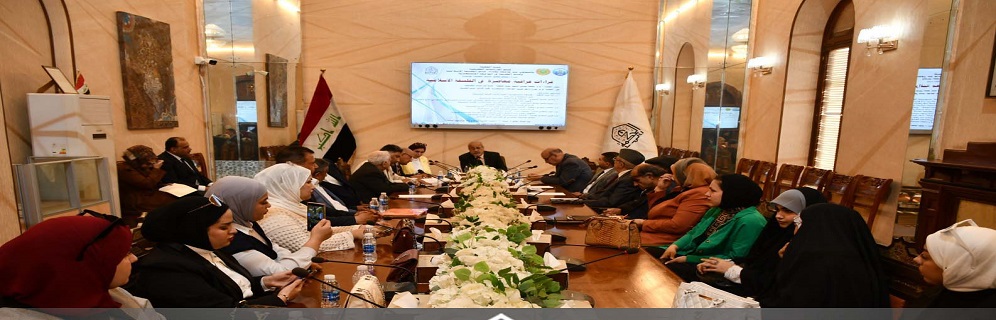
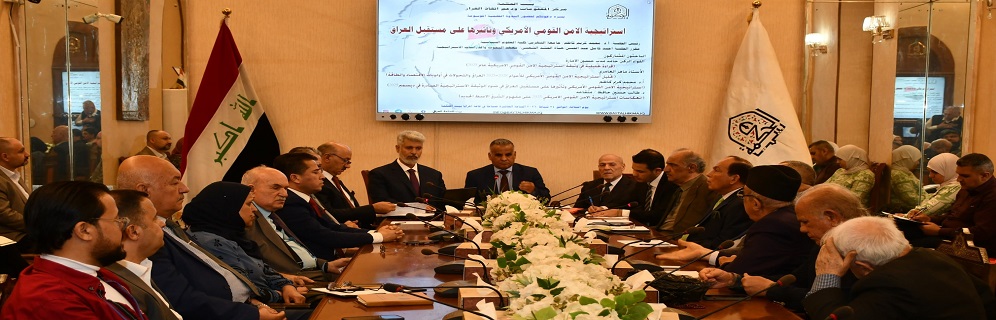
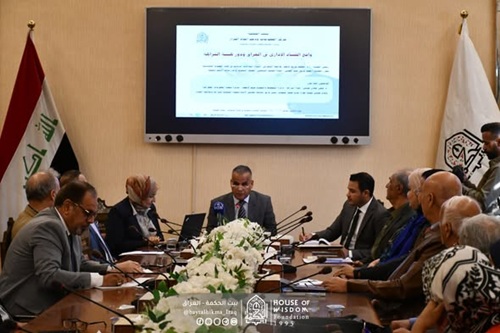
Bayt al-Hikma – the Information and Decision Support Center – organized a scientific seminar titled “The Reality of Administrative Corruption in Iraq and the Role of the Integrity Commission” on Monday, 17 November 2025, at the Miraya Hall of Bayt al-Hikma.
The session was chaired by Prof. Dr. Mohammed Kareem Kazem from the College of Political Science at Al-Nahrain University, while researcher Ahmed Kamel Abdul Hassan from the Institute of Research and Strategic Studies – Popular Mobilization Authority served as the rapporteur.
The seminar examined the current state of administrative corruption in Iraq, identifying it as one of the most significant challenges to state-building and institutional reform. Administrative corruption, and the financial corruption linked to it, continues to hinder institutional development, weaken the quality of government projects, delay the implementation of development plans, and erode public trust in state institutions.
Dr. Layla Jehan Hussein from the Integrity Commission – Department of Planning and Research, presented a paper explaining that corruption is a global and deeply rooted phenomenon, not limited to a specific time or place. Its levels vary depending on political, economic, and cultural conditions and are reflected in the Corruption Perceptions Index, which assesses the performance of 180 countries worldwide. She also reviewed leading definitions of administrative corruption, including those presented by Transparency International and the United Nations Convention against Corruption. Although the Convention does not provide a precise legal definition, it classifies corruption-related acts such as bribery, embezzlement, abuse of power, illicit enrichment, and influence peddling as criminal offenses.
Researcher Hisham Mohammed Jasem, also from the Integrity Commission’s Department of Planning and Research, presented a study on the National Integrity Strategy for Combating Corruption (2021–2024). He explained that the strategy aims to promote a culture of integrity, enhance institutional performance, and combat financial and administrative waste. He also highlighted the government’s post-2003 efforts to join the UN Convention and to update anti-corruption legislation.
For his part, Dr. Qahtan Ne’mah Hassan Al-Khafaji, Chairman of the Board of Trustees at Bayt al-Hikma, emphasized that administrative corruption remains the greatest obstacle to building strong state institutions capable of delivering effective public services. He stressed that addressing this challenge requires clear political will, robust oversight mechanisms, continuous legislative updates, and the strengthening of a culture of citizenship and public responsibility.
He also underscored the role of research centers and academic institutions in studying corruption cases and analyzing their underlying causes, affirming that the Board of Trustees supports initiatives aimed at building a more efficient and transparent administrative system. He called for empowering youth and professional cadres to participate in the reform process, noting that “combating corruption is not solely a governmental responsibility, but a shared duty for all.”
The seminar was attended by a group of academics, researchers, and specialists in administrative reform, who enriched the discussion with their comments and insights