
receipt of scientific research

Search
Monthly activity schedule
Electronic inquiries

Statistics
Today Visitors No : 3640
Yesterday Visitors No : 7311
Total Visitors No : 2841140
Complaints and suggestions

UR- E- GET

From Photo Gallery

E-IRAQ
Newsletter
News Details
Machine Translation and the Challenges of Transferring Meaning and Culture
28-01-2026
Machine Translation and the Challenges of Transferring Meaning and Culture
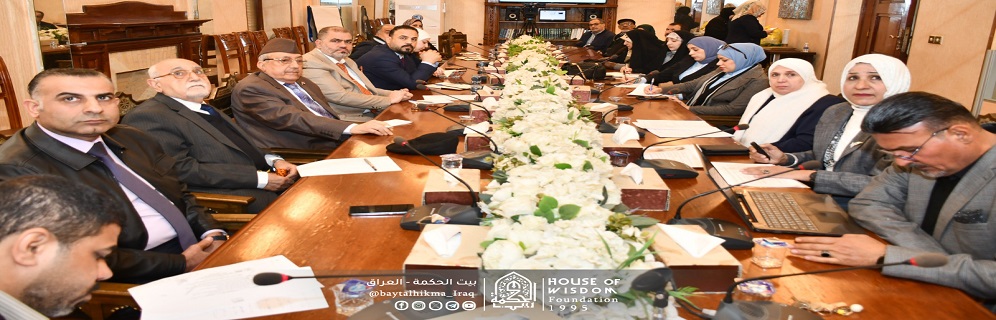
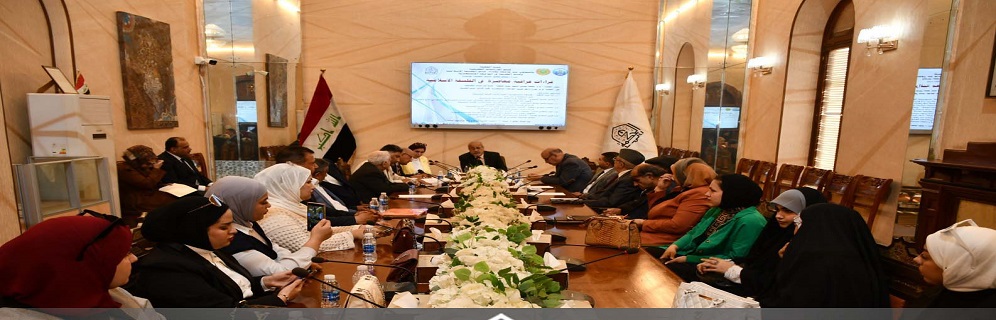
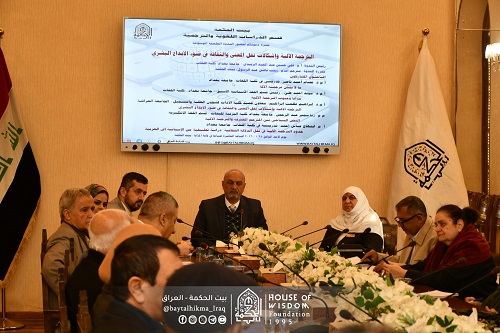
Bayt al-Hikma – Department of Linguistic and Translation Studies – organized a scientific seminar on Sunday, 25 January 2026, at the Hall of Mirrors, entitled “Machine Translation and the Challenges of Transferring Meaning and Culture in Light of Human Creativity.” The seminar was attended by the Vice President of the Board of Trustees of Bayt al-Hikma, Dr. Muhannad Abdul Hassan, along with a number of professors, academics, and researchers specializing in translation and languages.
The seminar was chaired by Assistant Professor Dr. Ali Hussein Abdul Majeed Al-Zubaidi from the College of Languages, University of Baghdad, while the rapporteur was translator Zainab Fadhil Abdul Rasool from the Department of Linguistic and Translation Studies at Bayt al-Hikma.
The seminar shed light on the cognitive and cultural challenges facing machine translation, highlighting its limitations in conveying the deep meanings and connotations of translated texts, and emphasizing the role of human creativity in addressing what automated systems fail to achieve, particularly in light of the rapid development of artificial intelligence technologies.
Several researchers participated by presenting specialized academic papers. Foremost among them was a paper by Assistant Professor Dr. Issam Ahmed Nasser from the College of Languages, University of Baghdad, entitled “What Machines Cannot Translate,” in which he discussed the most prominent linguistic, cultural, and creative aspects that machine translation systems are unable to convey accurately, such as nominal and spatial connotations, idiomatic expressions, and textual context. He emphasized that linguistic and cultural dimensions often exceed the capabilities of automated translation systems.
Dr. Ibrahim Tal‘at Ibrahim, Assistant Dean of the College of Arts for Student Affairs and Registration at the Iraqi University, also participated with a paper entitled “Machine Translation and the Challenges of Transferring Meaning and Culture in Light of Human Creativity.” He focused on the importance of integration between human effort and modern technologies in addressing semantic and cultural challenges in translation, the applicability of machine translation in translated texts, and presented specialized models aimed at improving translation quality.
In conclusion, Dr. Mu’ayyad Ahmed Ali, former Head of the Spanish Language Department at the College of Languages, University of Baghdad, presented a research paper entitled “Advantages and Disadvantages of Machine Translation.” He reviewed technical advantages such as aiding comprehension, speed, productivity, cost efficiency, and ease of use, in contrast to shortcomings related to conveying cultural meaning, repetition of errors, lack of expressive depth, and absence of creativity. He concluded that, despite its advantages, machine translation still requires an active and essential role for the human translator.
The seminar concluded with several recommendations, including activating the role of institutions concerned with translation, introducing academic courses that engage with machine translation tools and software, increasing linguistic studies due to their central role in society, and encouraging translators to keep pace with machine translation technologies and employ them in support of human translation.
The seminar was attended by a number of professors, academics, and specialized researchers who enriched the discussion through their interventions and comments.
More News
The vision and mission

Strategy Plan

FREE books

Film
Change the value of the Iraqi currency .. Benefits and costs Seminar held by the Department of Economic Studies
Clock
Visitor Map
mop
Energy subsidies and emissions reduction